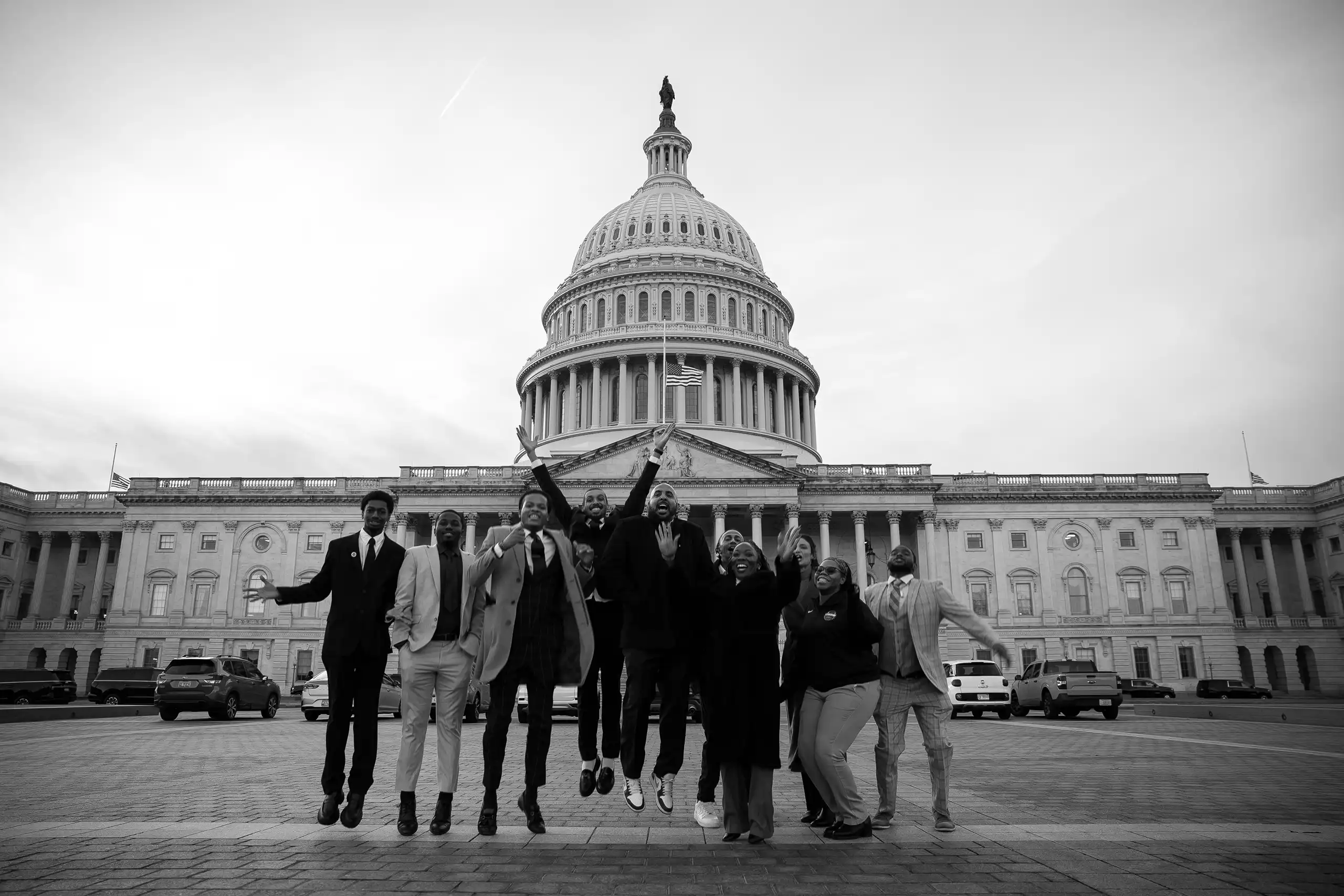
Why Jump
We have a massive problem in america. 80 million people, one in three adults, have an arrest record. That number is expected to climb to 100 million by 2030.
More than 44,000 local, state, and federal laws prevent people from access to education, employment, and economic mobility. These barriers lock people into systemic poverty, fuel recidivism, and fracture the very communities we all want to make strong and safe.
This is America's Scarlet Letter. A sigma that prevents people from the ability to rewrite their futures.
Why
Jump?

We’re Built Different
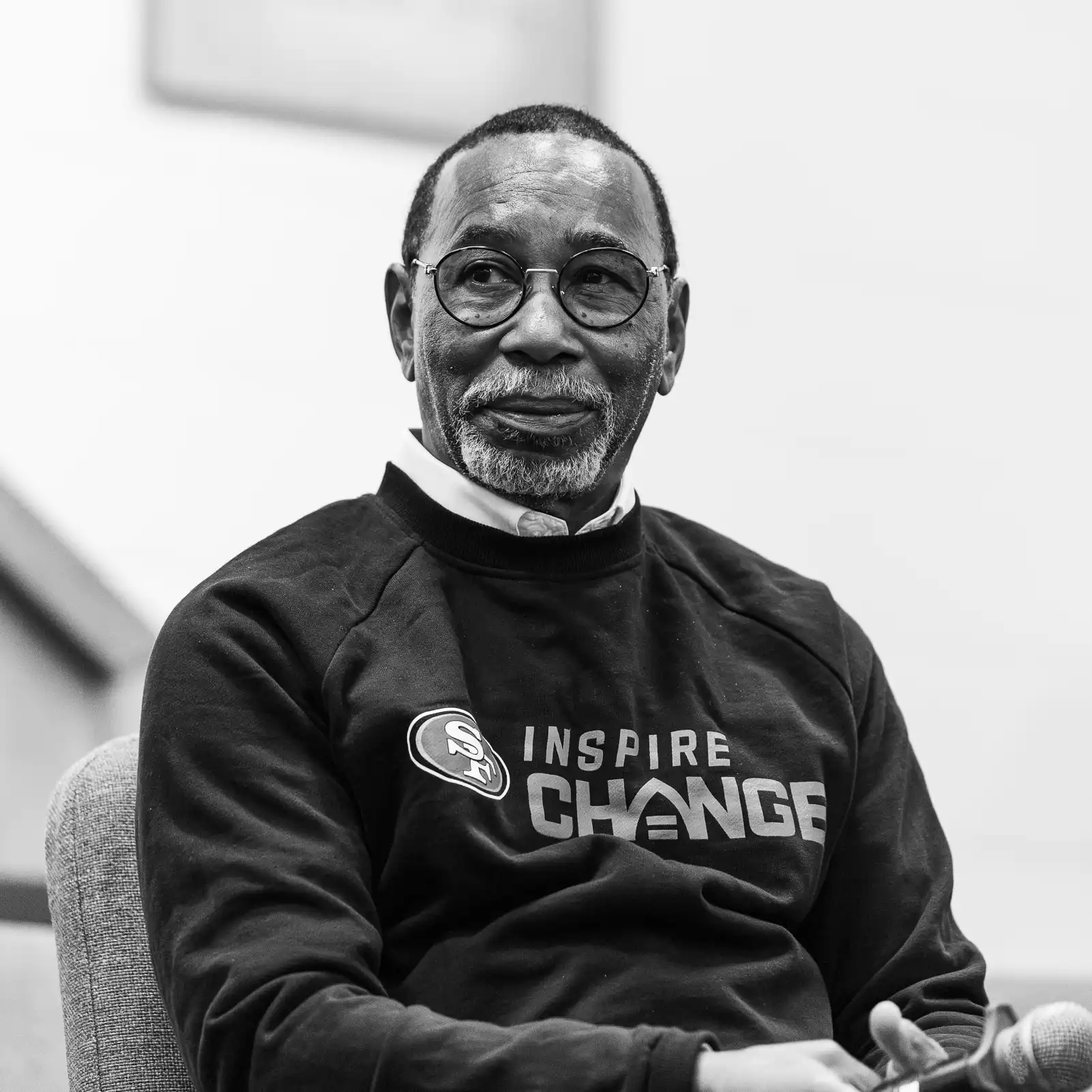
JUMP operates at the intersection of sports, culture, business, and justice.
Where traditional approaches address these challenges through one lens, direct service, advocacy, or storytelling, JUMP connects all of them into a reinforcing flywheel: education and employment pathways, policy reform, cross-sector coalitions, and public narrative.
New pathways create new stories. New stories shift culture. Shifted culture opens policy. Open policy creates more pathways.
What powers that cycle is JUMP's foundational insight: the cultural influence of sports, entertainment, and business, can do what traditional approaches alone were never designed to do. They move belief at scale. They don't just reach audiences; they shape what people value, who people root for, and what people think is possible. JUMP doesn't borrow that influence. It was built from it, by leaders who spent decades mastering the intersection of culture, brand, and business at the highest level.
JUMP adds a dimension to the movement that hasn't existed, not because the work being done isn't vital, but because this particular work requires a particular origin, a particular set of relationships, and a particular understanding of how culture actually moves.

We’re Proximate
"WE CANNOT CREATE JUSTICE WITHOUT PROXIMITY"
-Bryan Stevenson
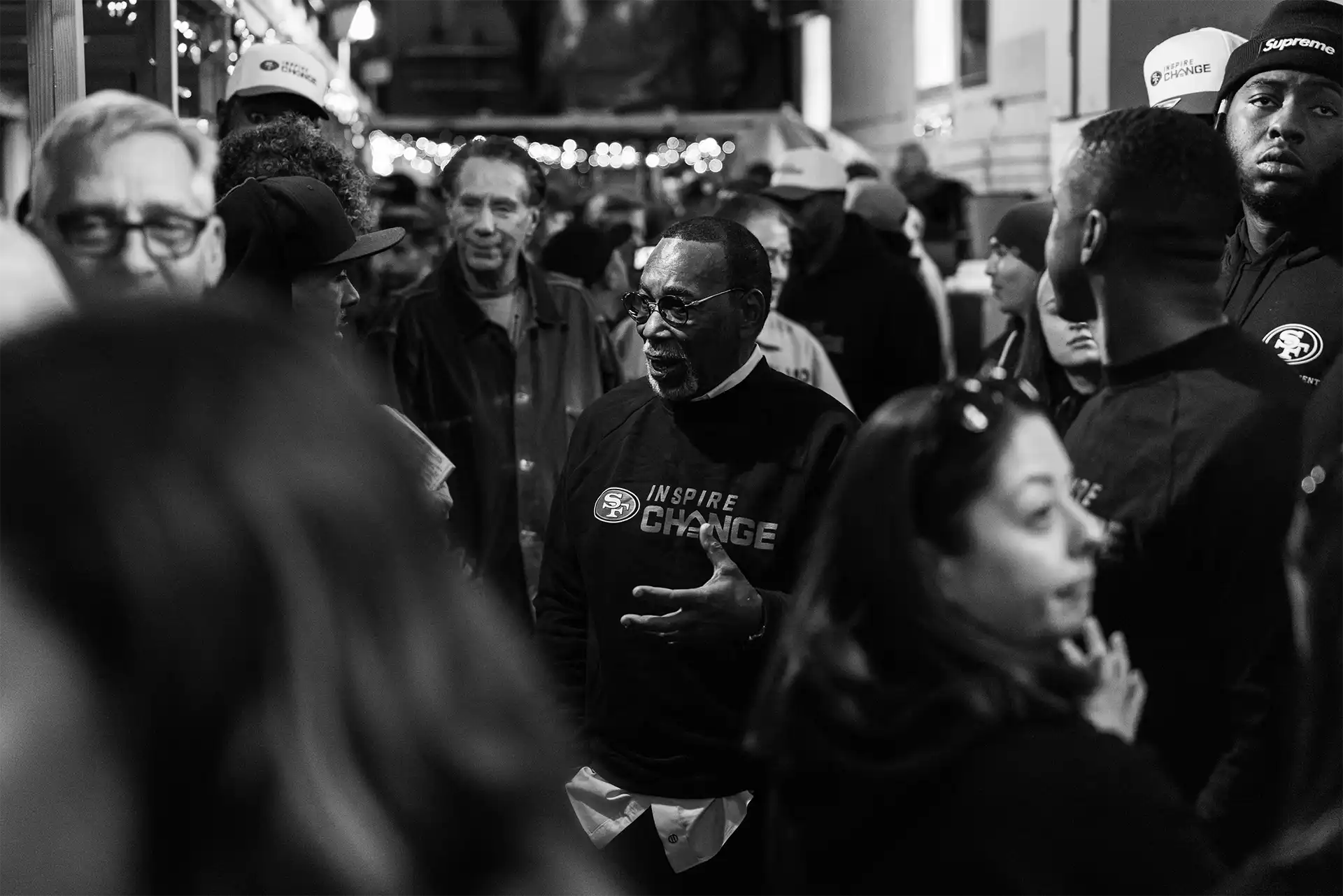
Proximate leaders, those who arise from the communities they serve, possess the experience, relationships, and knowledge essential for developing solutions with measurable and lasting impact.
JUMP doesn't just endorse this principle. JUMP is this principle.
JUMP's founder spent four decades building one of the most iconic brands, for the most iconic athlete, on the planet. He grew a cultural institution from $150 million to billions in global revenue, while carrying the weight of a past that would have disqualified him from most entry-level jobs. His journey from imprisonment to the highest levels of the corporate world is not a biography. It’s proof of concept, living evidence that millions of people who have been overlooked hold extraordinary talent and capacity for excellence.
JUMP's President & CEO, after spending nearly 24 years of incarceration, secured $30 million dollars to build the first residential tech training campus for men and women impacted by the justice system. He then rose to executive leadership as Vice President of Corporate Social Responsibility at a $5 billion dollar tech company.
His career isn't a résumé. It is a blueprint for what becomes possible when talent meets opportunity.
This is proximate leadership. This is knowledge that can only come from having lived experience and having demonstrated the proof that different outcomes are not only possible, but they’re repeatable at scale.
We See
The cost of exclusion is staggering.
Locking 80 million Americans out of the workforce costs the economy $87 billion annually. The unemployment rate for people with records is nearly 30%. Ten times the national average.
When barriers fall, the math changes completely.
Every person with a record who gains livable-wage employment adds $105,000 annually to the GDP.
Employing 80 million Americans with records at liveable wage would generate $8.1 trillion in total economic value.
And the returns compound:
Liveable wage employment reduces recidivism by 69%
Businesses access a talent pool that performs as well or better than other employees
Individuals gain dignity and self confidence
Families become more stable
Less crime and fewer victims
Communities become stronger and safer



We Have the Keys
JUMP sees what has traditionally been overlooked.
To Business: First and Second Chance employment isn't generosity, it's a talent strategy that finds loyalty and commitment traditional pipelines miss.
To Policymakers: building stronger and safer communities is the investment this country keeps promising but rarely delivers.
To Culture: our collective stories are origin stories: resilience, reinvention, and transforming versions of ourselves forged under conditions most people can't imagine.
To Communities: where hiring actually happens, we bring business leaders, philanthropists, policymakers, community based organizations, and institutions of higher education together to build the local ecosystems necessary to turn First and Second Chances from possibility into practice.
JUMP doesn't just make this argument. JUMP is the argument. Every program, every partnership, every output we build is grounded in a commitment to excellence that old stories can’t survive standing next to. Because the most powerful form of narrative change is never a campaign. It's proof.